

Delegates to the Federation of Asian Bishops’ Conferences (FABC) plenary urged local Churches to strengthen their response to war, forced migration, widening inequality and environmental degradation as crises deepen across Asia.
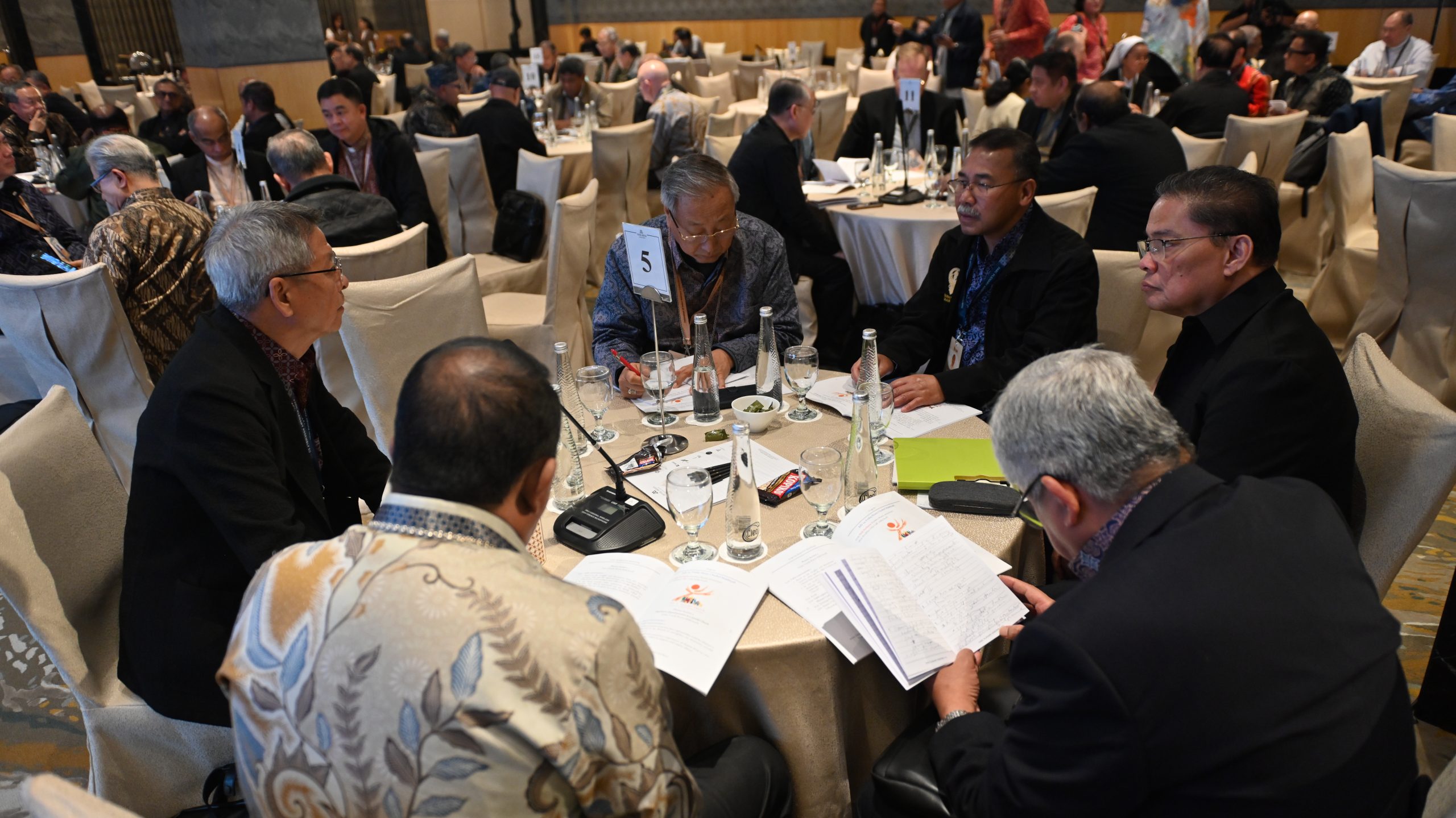
The concerns emerged from reports presented July 23 by more than 20 discussion groups during the 12th FABC Plenary Assembly in Jakarta, according to a briefer from the federation’s Office of Social Communication.
Cardinals, bishops, priests, religious, and lay delegates identified political polarization, religious extremism, and aggressive nationalism among the major challenges confronting the region.
The reports also cited fractured families, declining trust in institutions, misinformation on social media, and the search for meaning among young people.
Several groups called on the Church to strengthen its work on peacebuilding, migration, environmental stewardship, family life, and mental health. They also urged greater attention to digital ethics and the responsible use of artificial intelligence.

Delegates viewed migration not only as a humanitarian challenge but also as an opportunity for the Church to accompany people crossing borders.
The reports noted that migrants often carry their faith into new communities, while local Churches are called to become places of welcome, accompaniment, and communion.
Catholic schools, universities, health care institutions, charitable organizations, and social ministries were identified as key places where the Church can build bridges by serving people of different faiths and backgrounds.
In countries where Catholics are a minority, the reports said these ministries often provide the Church’s most credible public witness.
The discussions also linked the Church’s response to regional crises with the need for renewal within its own communities and institutions.
Participants called for greater involvement by laypeople, women, young people, migrants, Indigenous communities, and other marginalized groups. They described shared responsibility as a mark of synodality and urged priestly formation centered on accompaniment, dialogue, and discernment.
The reports called for a Church less focused on institutional maintenance and self-preservation and more committed to mission, communion, and shared responsibility among the baptized.
The discussion format, called Table Conversations, followed earlier sessions using Conversations in the Spirit, a process centered on prayer, attentive listening, and spiritual discernment.
Unlike the earlier structured sessions, the Table Conversations allowed delegates to discuss more freely the challenges facing the Church and identify possible pastoral responses.
The reports will contribute to the drafting of the assembly’s Vademecum, a pastoral guide intended to help local Churches across Asia continue the synodal process.
Originally published on LiCAS.news